
Setting and Infrastructure (SI)
King Mongkut’s Institute of Technology Ladkrabang, is an institute following the King Mongkut’s Institute of Technology Ladkrabang, King Mongkut’s Institute of Technology Thonburi, and King Mongkut’s Institute of Technology North Bangkok Act of 1985. As a legal entity, it is classified as a university affairs office, with the goals of studying, analyzing, enriching, and providing services in technology, science, and technical education, including maintaining the art and culture of the country. In the 8th of March, 2008, King Mongkut’s Institute of Technology Ladkrabang changed its status to an autonomous university, as announced in the Royal Thai Government Gazette, Book 125, Part 45, Series A, published on 7 March, 2008, pages 95 – 124.
King Mongkut’s Institute of Technology Ladkrabang consists of King Mongkut, in which His Majesty King Bhumibol Adulyadej granted a royal permission to use his royal symbol, “Phra Maha Mongkut” as the institute’s emblem. It is considered sacred, and extremely auspicious. Its Thai name also contains the phrase “Chao Kun Thahan”, which is held as a memorial to Chaophraya Surawong Waiyawat, commonly known as “Chao Kun Thahan”, as Ms. Liam Protpittayapayat, his heir, stated her intentions in donating the land on which the institute is currently located, with 1,345.6 square kilometers used from a total of 1,665.6 square kilometers donated (the remaining 320 square kilometers was donated to Protpittayapayat School).
King Mongkut’s Institute of Technology Ladkrabang has two campuses. The first one is King Mongkut’s Institute of Technology Ladkrabang which is located in Ladkrabang district of Bangkok in Thailand and has been designed as the central administration office of the campus. Another one campus is King Mongkut’s Institute of Technology Ladkrabang Prince of Chumphon Campus which is located in Chumphon province in Thailand.
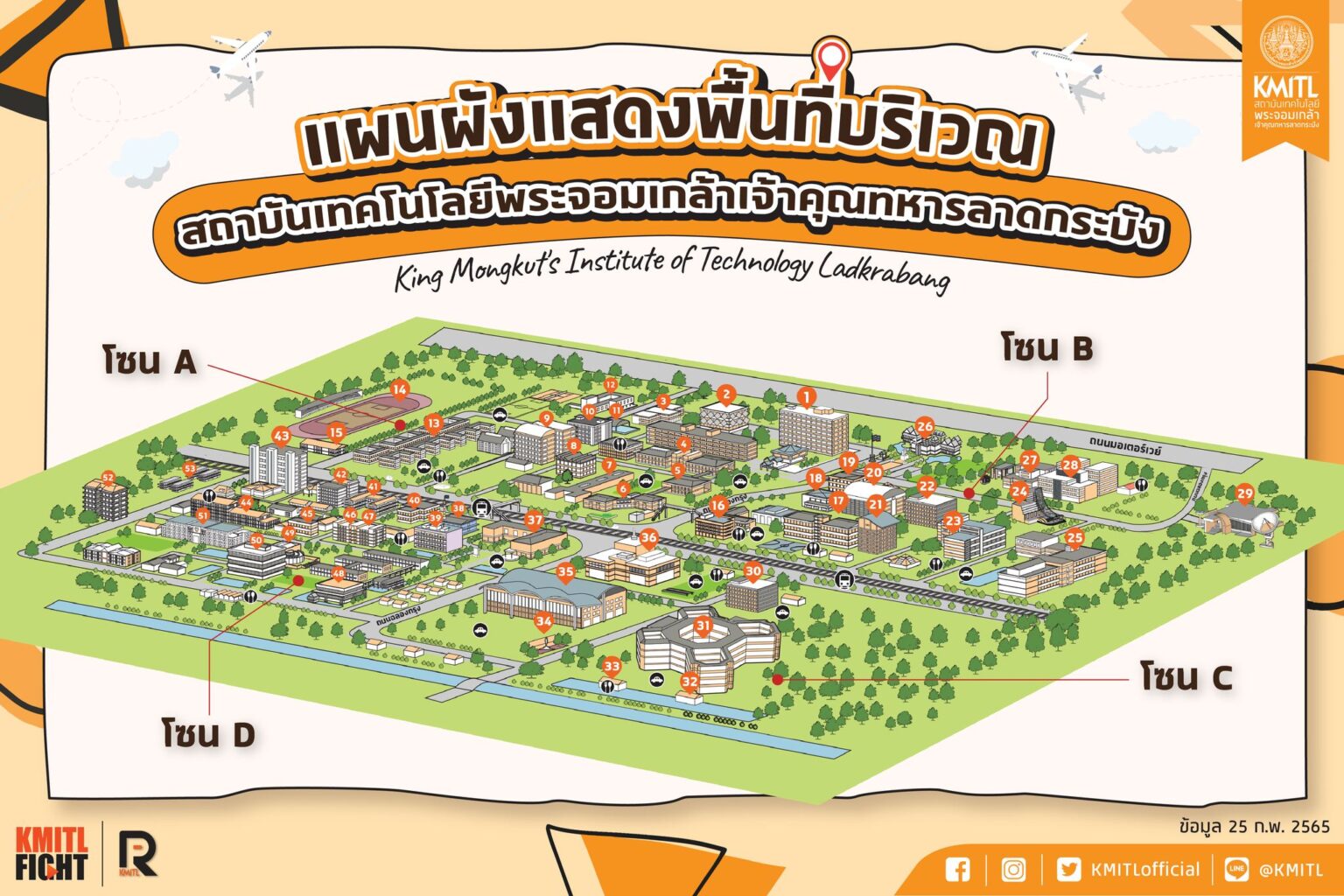
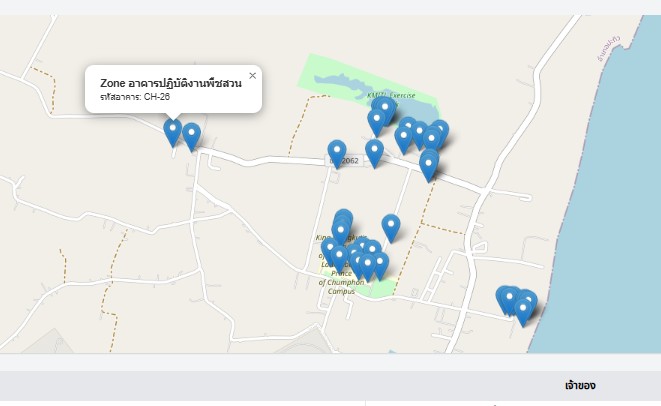
KMITL and KMITL Prince of Chumphon have a total building area of 783,039 m². Buildings at KMITL are arranged in different zones around the campus. The layout was planned to make it easy to get around, support the number of students, ensure safety, and include green and open areas. This helps create a well-organized and friendly environment for learning and campus life.
Campus facilities for disabled, special needs, and/or maternity care
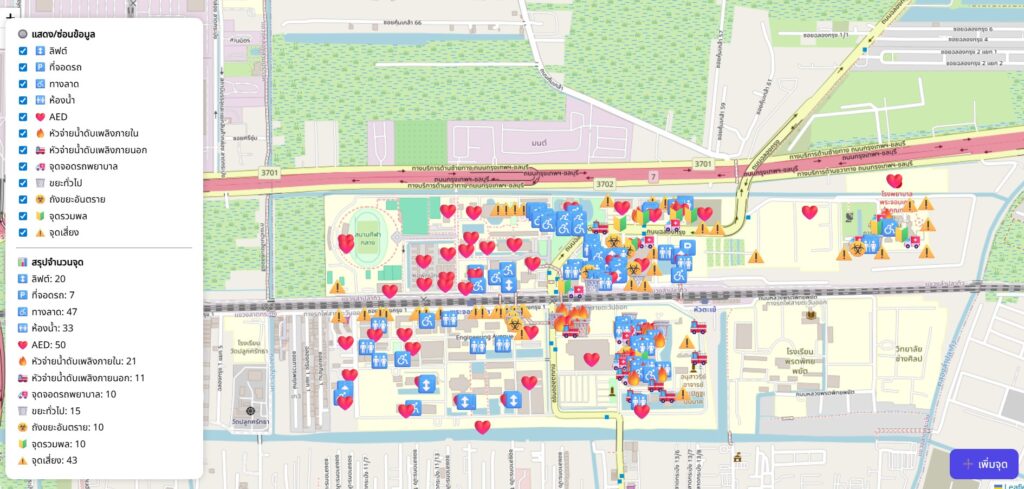
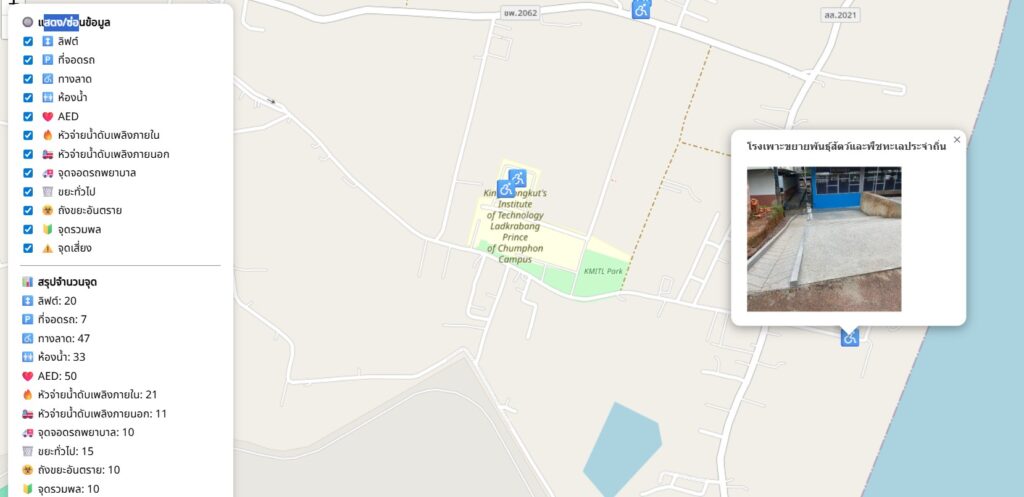
KMITL demonstrates a strong commitment to inclusivity and universal accessibility through its ICT-integrated Smart Facility Dashboard, which supports the planning, monitoring, and continuous improvement of campus infrastructure for persons with disabilities, special needs, and maternity care.The system, accessible via https://sunun.top/ffd/, is a GIS-based interactive map that tracks and displays inclusive infrastructure in real time. Key features include:
- 47 accessible ramps and pathways with photographic verification to ensure barrier-free movement across buildings and open spaces
- 33 accessible toilets, strategically located for convenience across academic and residential zones
- 20 designated accessible parking spaces, mapped and monitored for usage and availability
- Real-time images attached to each mapped point, allowing administrators to verify compliance and conditions remotely
- Dynamic data layer summaries of all inclusive facilities to support planning, upgrades, and budget allocation
- Integration of emergency medical features (AED stations, first aid points) close to areas where disabled or maternity-support users frequent