Waste (WS)
KMITL has launched various 3R programs. (Reduce, Reuse and Recycle)
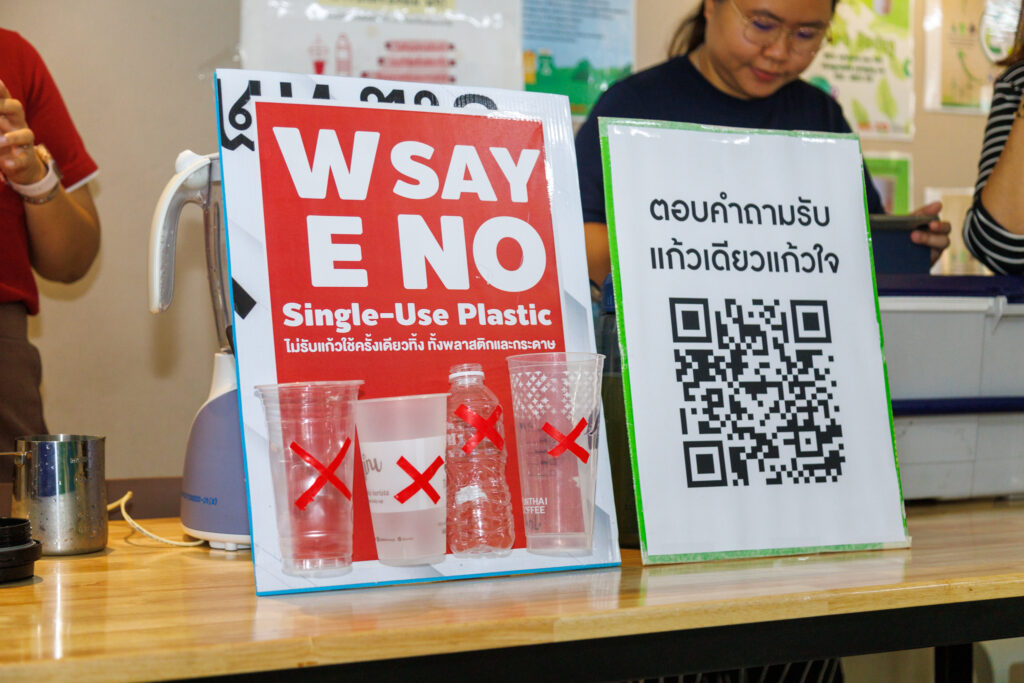
For example, an ongoing university-wide initiative called “KMITL ZERO WASTE” consists of regular and diverse 3R activities that engage students and staff. These activities include waste sorting workshops, waste exchange campaigns, reusable product promotions, and creative recycling events. The program is implemented consistently across semesters and throughout the academic year.
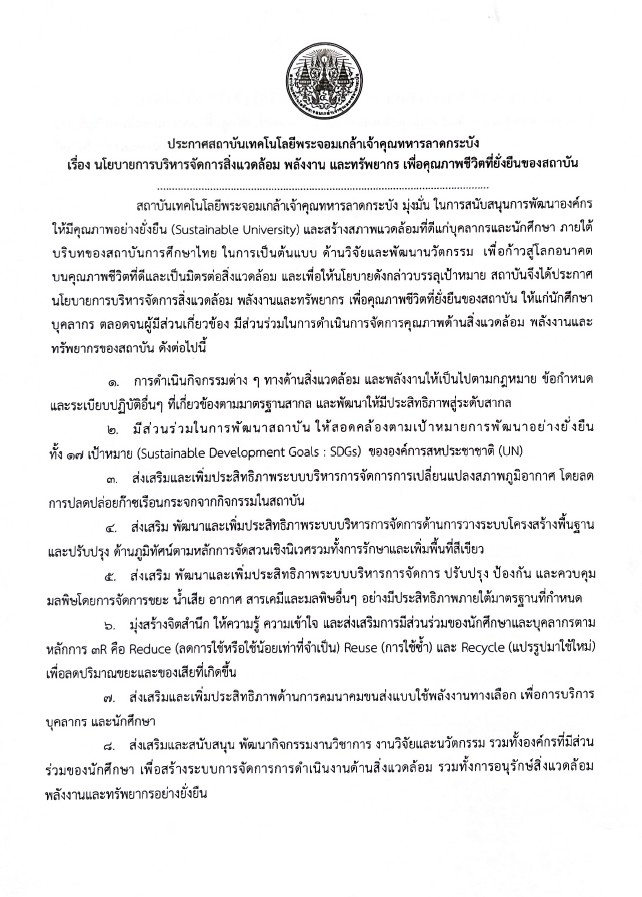
King Mongkut’s Institute of Technology Ladkrabang is committed to supporting sustainable organizational development (Sustainable University) and fostering a healthy environment for its personnel and students under effective and participatory management. The Institute emphasizes organizational development that enhances quality of life and environmental sustainability in parallel with its core missions.
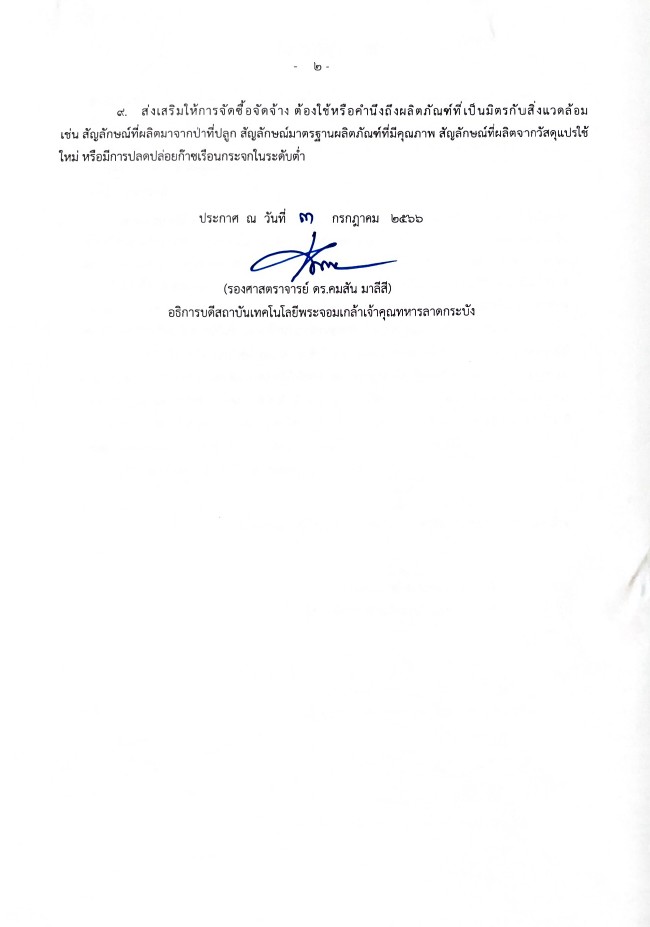
King Mongkut’s Institute of Technology Ladkrabang (KMITL) manages non-toxic inorganic waste—including general waste, paper, plastic, metal, and electronic waste—through proper methods that align with environmental best practices. The key approaches include:
1. Waste Separation at Source: The university promotes waste separation by providing categorized bins throughout the campus, including academic buildings, dormitories, cafeterias, and public spaces. Waste is separated into RDF, general waste, recyclable waste, and organic waste (see Figure 1).
2. Recyclable Waste Management: Recyclable inorganic waste such as paper, plastic, and metal is collected by janitorial staff in each area and stored for sale to certified recycling vendors. (see Figure 2 and 3)
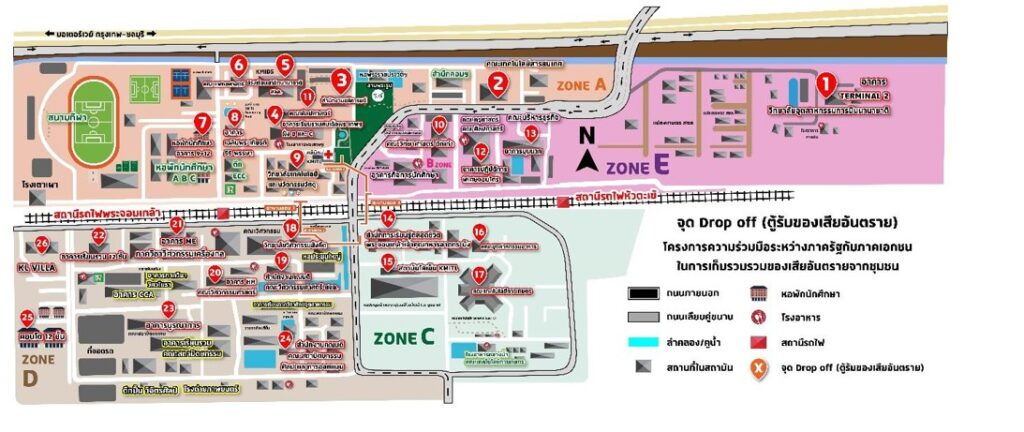
3. Electronic Waste Management: Electronic waste is collected at multiple designated drop-off points across the campus. The Office of Physical Resource and Environmental Management is responsible for collection and coordination with the Lat Krabang District Office for proper disposal. (see Figure 4 and 5)
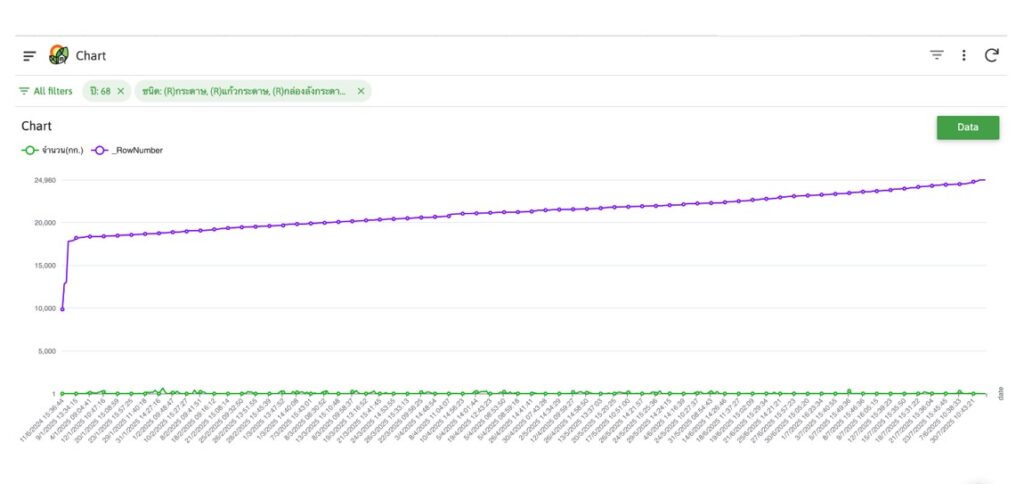
4. Data Recording and Monitoring: KMITL utilizes the “Waste Management Application” to record and monitor all types of waste generated on campus. Data is analyzed through a central dashboard to evaluate performance and continuously improve waste management strategies. (see Figure 6)
5. Education and Awareness Programs: As part of the KMITL Zero Waste Project, various sub-activities have been organized to promote the 3Rs (Reduce, Reuse, Recycle) and to provide knowledge and training to students and staff. These activities are categorized into three key plans: (see Figure 7)
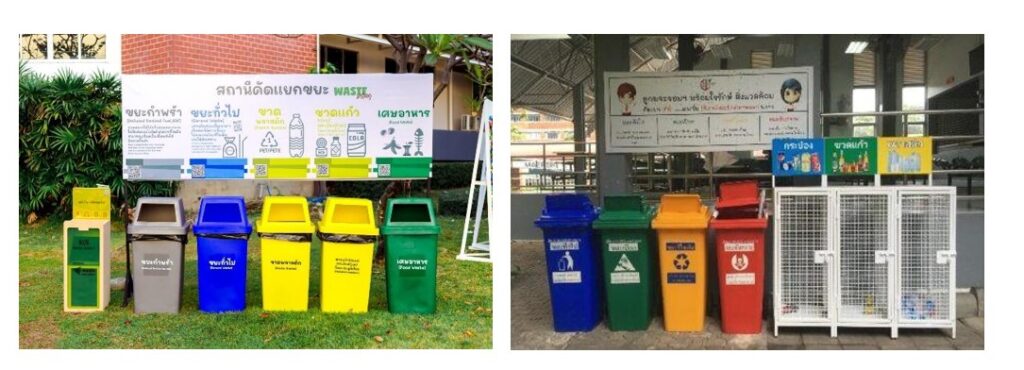
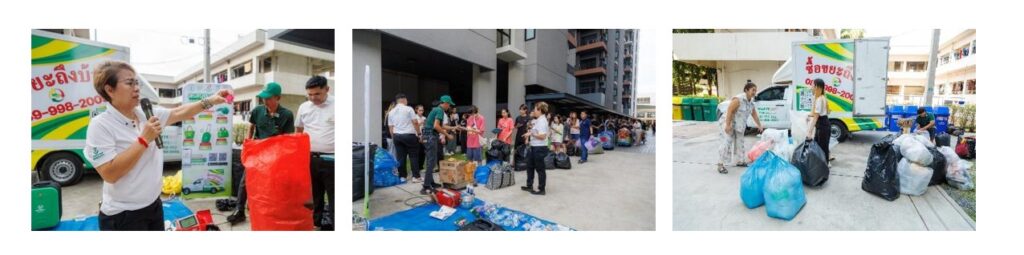
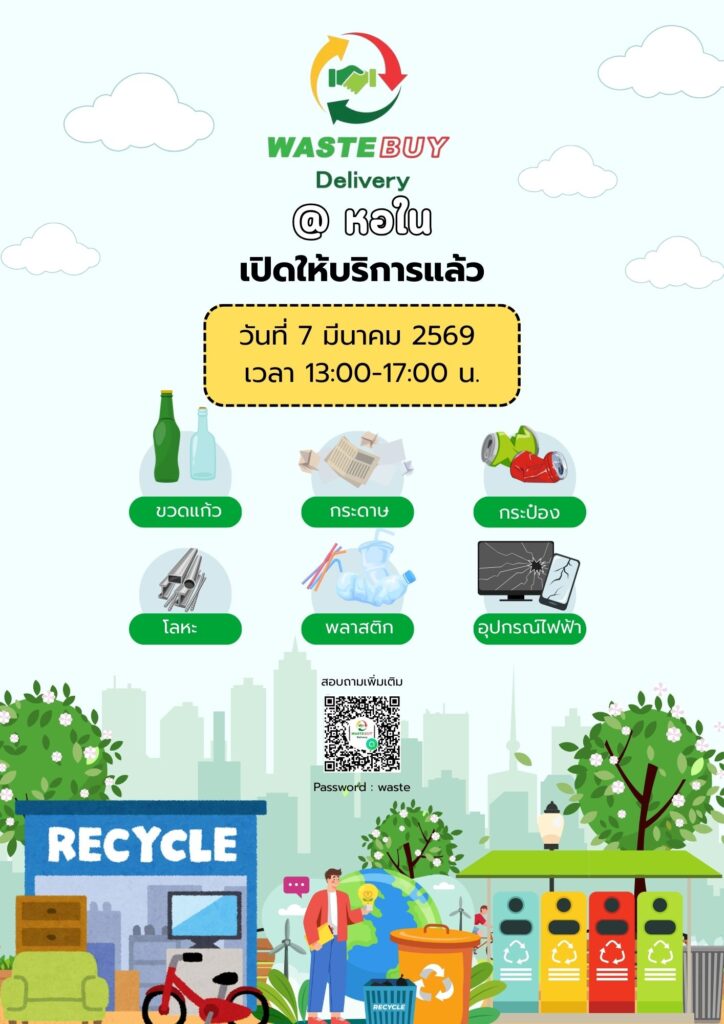
Figure 3: Collection schedule showing designated dates for recyclable waste pickup at student dormitories
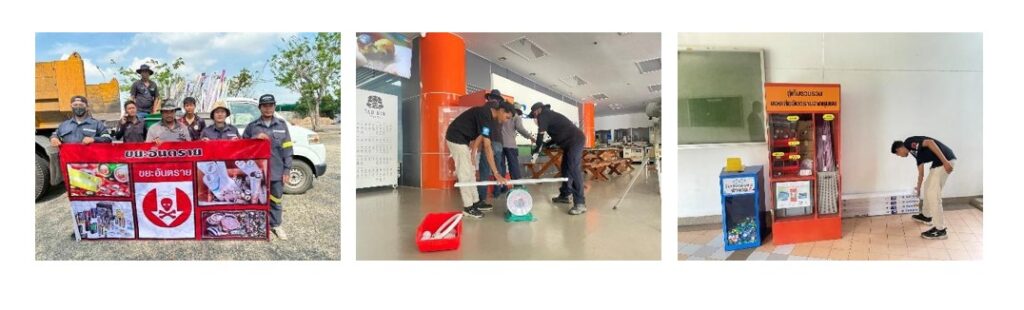
Activities under the KMITL Zero Waste campaign.